In 2026, SEO is no longer about who has the most backlinks or who stuffed the right keyword density.
It’s about who Google trusts the most — and that trust now comes from something deeper than domain age or DR.
Welcome to the age of Topical Authority — the new SEO ranking superpower that’s quietly redefining how content wins search intent and visibility.
What is Topical Authority?
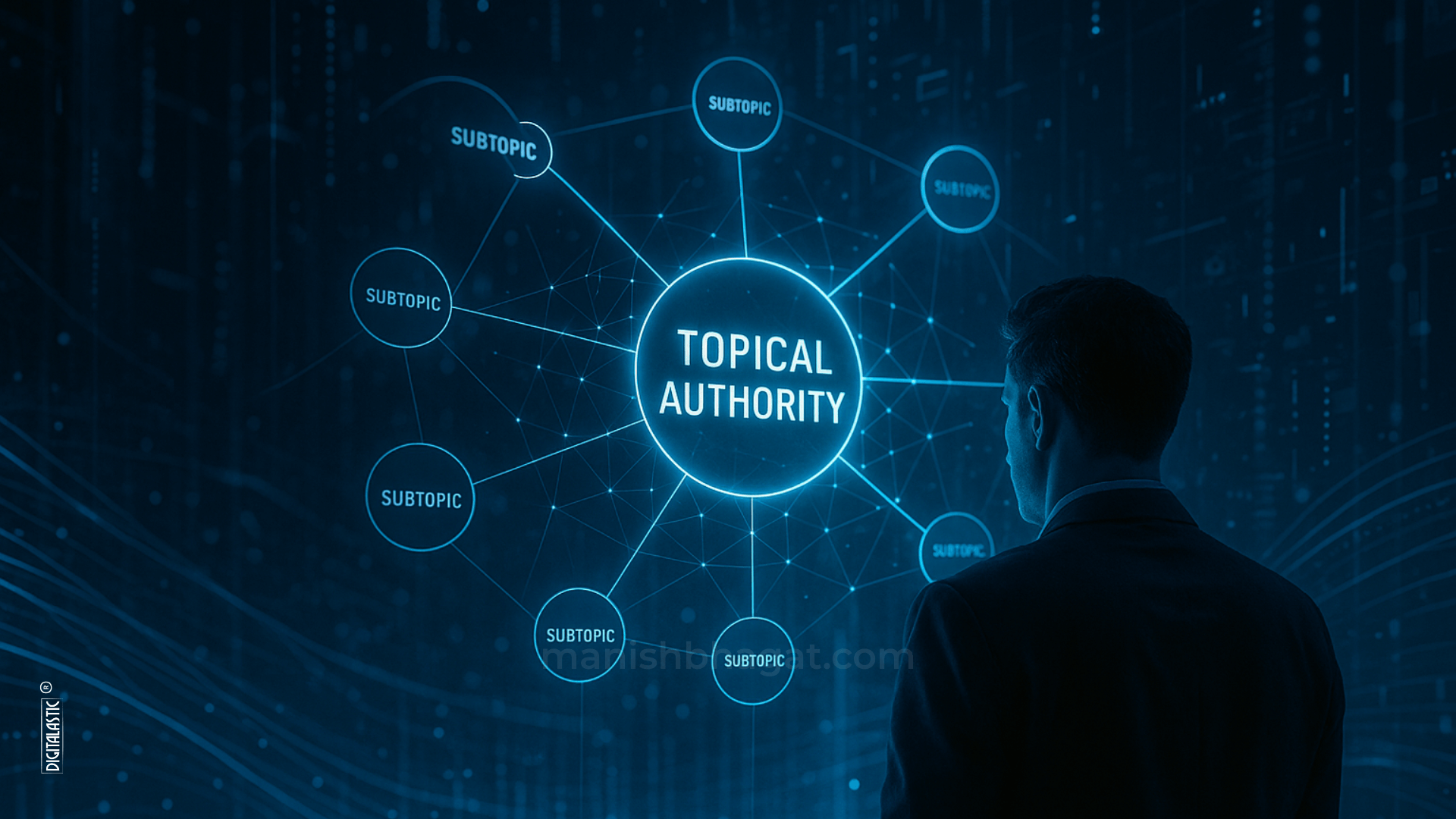
Topical Authority means becoming the go-to source for a specific subject in Google’s eyes.
It’s when your website consistently publishes expert-level, interconnected content around a niche topic — so effectively that Google starts recognizing you as an authority in that area.
It’s not just ranking for a single keyword; it’s owning an entire topic cluster.
For example:
If you’re an HR software company, you don’t just rank for “best HR software” — you also rank for everything surrounding it like:
- “How to choose HR software for startups”
- “Top HR automation tools for small businesses”
- “Employee onboarding software comparison”
When you dominate all those micro-topics, Google says, “This brand knows the subject better than anyone.”
That’s Topical Authority in action.
Why Topical Authority Is the Ranking Superpower of 2026
1. Google’s EEAT + Helpful Content Update Synergy
In 2026, Google’s EEAT (Experience, Expertise, Authority, Trust) and Helpful Content signals have merged into a single, behavior-driven ranking ecosystem.
Websites with deep topical coverage and consistent expert perspective now outperform larger but generic competitors.
Search isn’t about volume anymore — it’s about depth, context, and interconnectedness.
2. AI-Driven Search (SGE) Prefers Contextual Experts
With Search Generative Experience (SGE), Google’s AI now understands topic relationships.
If your content demonstrates consistent expertise around one theme, SGE is more likely to pull your insights directly into AI Overviews — giving your brand premium visibility even above organic results.
3. Backlinks Still Matter — But Relevance Rules
In 2026, backlinks from contextually related sources outperform high-DR but irrelevant ones.
A single backlink from a topical expert site now carries more value than 20 random mentions.
Google wants semantic depth, not shallow link networks.
4. User Experience Reinforces Authority
Longer dwell times, repeat visits, and low bounce rates signal that your content genuinely helps users — a direct behavioral vote for your expertise.
The more users trust your site to solve their queries within one domain, the stronger your Topical Authority loop becomes.
How to Build Topical Authority in 2026
Let’s get practical — here’s how you can systematically build Topical Authority using Digitalastic’s proven framework 👇

Step 1: Define Your Core Topic & Subtopics
Pick one core theme where your business truly shines.
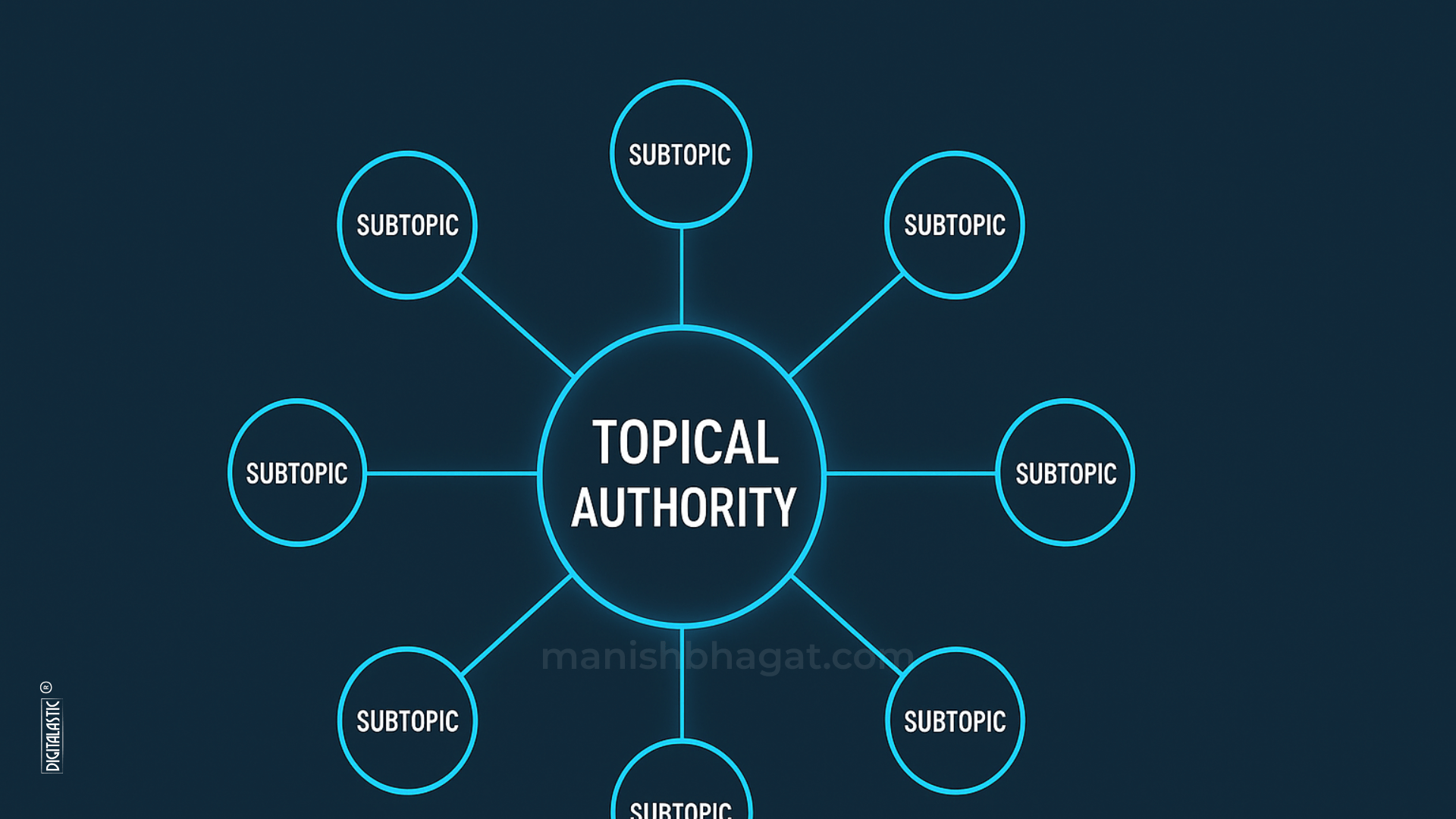
Then, break it into subtopics that form a content cluster.
Example (for HR software):
- Core Topic: HR Software for Small Businesses
- Cluster: Hiring automation, onboarding, payroll, time tracking, compliance, employee engagement.
Each of these becomes a standalone content pillar that links back to your core page.
Step 2: Create Pillar Pages + Cluster Blogs
Your pillar page should serve as the ultimate guide for your core topic.
Each cluster post should go deeper into one specific subtopic and link back to the main pillar.
This internal linking structure tells Google:
🧭 “All these pages belong to one knowledge ecosystem.”
Step 3: Build Content Velocity & Consistency
Publishing one great blog per month won’t build topical strength anymore.
You need content velocity — publishing at least 2-3 topic-connected posts weekly for 2–3 months.
Consistency is what helps Google connect the dots faster.
Step 4: Integrate Real-World Expertise
The “E” in EEAT — Experience — is your differentiator.
Use firsthand case studies, expert opinions, and results you’ve achieved for clients.
When you share proof-backed insights, Google’s AI and users both perceive stronger credibility.
Example:
“After optimizing 150+ HR software pages for our SaaS clients, we found that interlinking role-based feature blogs increased impressions by 48% within 45 days.”
That’s the kind of real experience that builds authority signals.
Step 5: Optimize Your Internal Linking Graph
Linking between related blogs signals semantic connectivity.
Each time Google crawls your website, it follows internal links to understand the scope of your expertise.
Use tools like Ahrefs Internal Link Opportunities or Screaming Frog to strengthen topic relevance and hierarchy.
Step 6: Update Old Content With New Perspectives
Topical Authority thrives on content freshness.
Update older posts with new stats, trends, and examples every 3–6 months.
Add “2026 insights,” new case studies, or evolving industry facts — this signals active expertise to Google.
Real-World Example: How Topical Authority Outranks DR
Imagine two websites:
- Site A: DR 78, 200 random blogs across 10 topics.
- Site B: DR 35, 30 interconnected blogs around one niche topic.
In 2026, Site B consistently outranks Site A for all intent-based searches within its domain — because Google’s AI now prioritizes topic ownership, not domain magnitude.
That’s why niche experts are winning against general giants.
Digitalastic’s Take on Building Topical Authority
At Digitalastic, we’ve seen this pattern repeat across industries — SaaS, eCommerce, and local businesses alike.
The formula is simple:
Depth beats breadth. Consistency beats volume. Experience beats theory.
When your content ecosystem reflects these values, your website doesn’t just rank — it dominates its topic.
Final Thoughts: Authority Is the New SEO Currency

In 2026, Google’s definition of SEO success has evolved:
No more chasing 10,000 backlinks or ranking hacks.
The future belongs to brands that educate, connect, and serve consistently within their niche.
If you can become the most contextually complete source on your topic —
you don’t just earn clicks. You earn Google’s trust.
And trust, my friend, is the ultimate ranking superpower.
FAQs About Topical Authority in SEO (2026)
Q1. Is Topical Authority better than backlinks for ranking?
Backlinks still matter, but only when they’re contextually relevant. Topical Authority, however, builds lasting trust that doesn’t vanish when link profiles fluctuate.
Q2. How long does it take to build Topical Authority?
Usually 3–6 months of consistent, interlinked content publishing and user engagement — faster if you already have niche credibility.
Q3. Can small websites outrank big ones with Topical Authority?
Absolutely. Topical Authority levels the playing field — quality, consistency, and expertise now beat domain size.
Q4. How can I measure Topical Authority growth?
Track impressions for related queries, internal link graph depth, and semantic keyword coverage across your content cluster.
Q5. Does AI content help or hurt Topical Authority?
AI-assisted content works only if it’s reviewed, humanized, and experience-backed. Google rewards human experience with AI efficiency — not automation for quantity’s sake.